
At some point, every sales manager hits the same wall. The pipeline looks okay on paper, but nothing moves the way it should. Your reps are busy. Your forecast is a guess. Leadership wants more revenue, and the answer everyone keeps floating is hiring.
More reps. More headcount. More chaos with better-looking org charts.
Here's the thing nobody wants to say out loud: adding people to a broken system just gives you more broken. If your sales process is inconsistent, unclear, or invisible, five new reps will execute it five different ways. You'll spend the next six months onboarding and hoping instead of selling and winning.
Scaling without adding headcount is not a fantasy. It is a systems problem, and a sales operating system is how you solve it.
Your Best Rep Is Not Your Business Model
Think about whoever on your team is crushing it right now. Consistent pipeline, clean CRM, strong close rate. They are great. Genuinely great.
Now ask yourself: can you explain exactly what they do differently? Can you teach it? Can you measure whether anyone else is actually doing it? Can you replicate it with the next hire?
If the answer is "kind of" or "not really," you don't have a sales process. You have a person. And that person will eventually get promoted, leave for a competitor, or burn out carrying a number that should belong to the whole team.
Great reps are great. Repeatable results require a system.
That gap, between what your best rep does intuitively and what the rest of your team does consistently, is exactly where revenue leaks. Not in your messaging. Not in your market. In the space between knowing what good looks like and actually executing it every single day.
Why Sales Training Didn't Fix This (And Won't)
Be honest. How many trainings has your team sat through? How many two-day offsites, outside speakers, new methodologies rolled out in Q1 that were basically forgotten by Q2?
Training is not the villain here. It just cannot carry the weight we keep putting on it. You can teach someone how to run a discovery call on a Tuesday and watch them default to their old habits by Thursday. Not because they don't care. Because nothing in their daily workflow changed.
Why sales training fails almost always comes down to one thing: there is no system on the other side of it. The training ends, everyone goes back to their desks, and the new skills have nowhere to land. No shared language in the CRM. No meeting cadence built around the new process. No way for a manager to see whether any of it is actually happening.
Methodology is what to say. Execution is what to do. And if you cannot see the execution, you cannot improve it.
What Scaling Actually Looks Like
Scaling without adding headcount means your current team produces more. That sounds obvious. What is less obvious is the specific levers that make it happen.
When teams inside BZSOS, the Blind Zebra Sales Operating System, start running a consistent sales process, a few things change fast. Deals that were stalling start moving because reps know the exact next step and managers can see when they are not taking it. Forecast accuracy improves because pipeline stages mean something specific instead of being subjective gut calls. Coaching gets sharper because there is a process to coach against instead of just vibes and outcome data.
None of that requires a new hire. It requires visibility and structure.
One thing that comes up a lot in conversations with sales managers is that they feel like they are always nagging. Remind people to update the CRM. Remind people to send the follow-up. Remind people to do the thing you talked about last week. That loop is exhausting, and it does not actually create behavior change. It just means you are the enforcer instead of the coach.
A real sales operating system builds accountability into the workflow itself. The scoreboard shows who is doing the work. The process defines what the work is. You stop chasing people and start having actual coaching conversations.
The Tools Are Not the Problem Either
While we're here, let's address the tool graveyard. Most sales teams have Salesforce or HubSpot, some kind of enablement platform, a sequencing tool, maybe a call recording tool. And most of those tools are being used at about thirty percent of their potential because they were never connected to a consistent process.
On a recent Advanced Selling Podcast episode, Bryan was talking with John Wexler, the founder of Spokenote, about authentic video at scale. Spokenote does something sharp: it lets reps personalize outreach at scale without manufacturing fake intimacy or spending an hour recording one video. One authentic intro, one body, built for specific personas, deployed at real volume. The idea maps directly to what we talk about with sales execution, doing the high-value human stuff consistently and efficiently instead of either skipping it or drowning in it.
That is what good tools inside a good system look like. They reduce friction on the right activities, so reps do them more often, not less.
The teams that get the most out of tools like that are the ones with a defined sales process underneath them. The tools amplify what is already working. They cannot manufacture a system from scratch.
What a Sales Manager Can Actually Do Monday Morning
If you are sitting on a team right now that is plateaued and nobody is talking about adding headcount, here is what to look at first.
Start with process visibility. Can you look at your CRM today and tell, with confidence, where every deal actually is and what the real next step should be? If the answer is no, that is your first fix. Not a new hire, not another training. Get your process defined and get it visible.
Then look at your coaching time. How much of it is spent reviewing outcomes versus reviewing execution? Talking about what happened versus talking about what the rep did in the meeting, on the call, in the email? Outcome coaching feels productive but changes nothing. Execution coaching is where reps actually improve.
Sales success at the team level is not a talent acquisition problem for most managers. It is a systems clarity problem. The reps you have right now can produce more if they know exactly what to do, in what order, with what standard, measured in a way that everyone can see.
That is the work. And it is closer than it looks.
If any of this sounds like your week, we should talk. BZSOS, the Blind Zebra Sales Operating System, is built for exactly this: taking a sales team that is working hard and making that work actually compound. No fluff, no two-day event that fades by Friday. A system your reps will actually use because it makes their job easier, not harder.


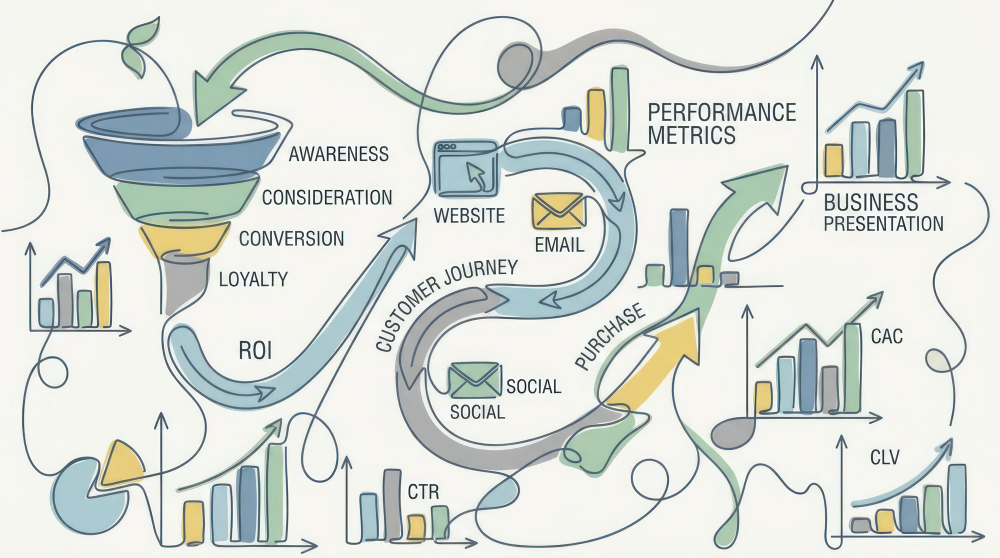


Align every step for every rep

